
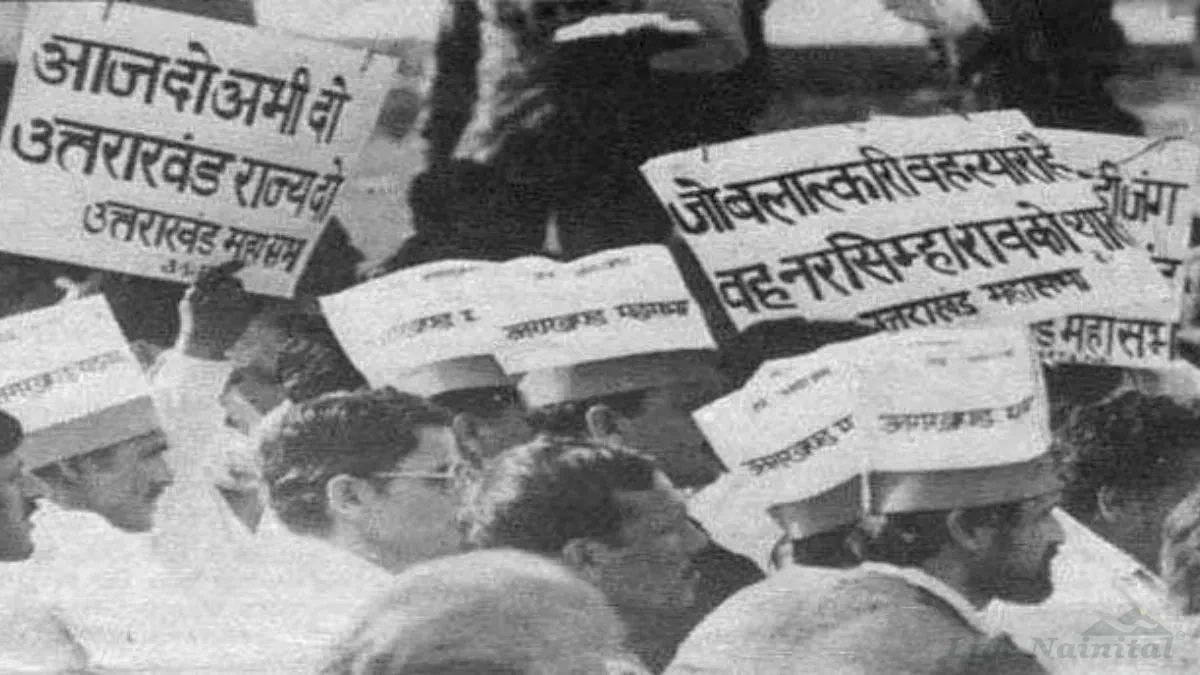

The 2nd of October is globally celebrated as Gandhi Jayanti, a day dedicated to the principles of non-violence and peace. However, for the people of Uttarakhand, the date carries a sinister weight, marking the anniversary of one of the darkest chapters in the state’s history. On October 2, 1994, a peaceful procession of hundreds of men and women from the Garhwal region, traveling by bus to Delhi to demand the creation of a separate Uttarakhand state, was intercepted by Uttar Pradesh police and administration at the Rampur Tiraha junction. What was intended as a routine checkpoint devolved into a nightmarish display of state-sponsored brutality, an event that has left deep, unhealed wounds on the collective conscience of the region for over three decades.
The brutality inflicted upon the unarmed protesters was so severe and systematic that it necessitated an intervention by the National Commission for Women (NCW). Under the leadership of then-chairperson Jayanti Patnaik, the commission’s team descended to the ground to investigate the allegations. Their findings, documented in a chilling report, revealed that in the cover of darkness, police forces fired tear gas shells directly into the buses. As terrified women attempted to flee for their lives, they were driven into nearby sugarcane fields where they were subjected to beatings with batons and rifle butts. The investigation uncovered horrific details of sexual violence, with reports indicating that dozens of women had their clothes torn and their jewelry and money snatched by uniformed personnel. One survivor recounted to the commission, through tears, how her feet became entangled in a pile of sari fabrics—clothes stripped from other victims—while she ran through a knee-deep water channel to escape the carnage.
The violence did not end with physical assault; it escalated to acts of extreme depravity, including the rape of helpless women inside the buses and in the fields. The tragedy was compounded by the loss of innocent lives, most notably that of a mother who, having already lost her son, stepped forward to shield other young men from the police violence. In a cold-blooded act of vengeance, she was shot dead in the head. This incident at Rampur Tiraha was not merely a law enforcement failure; it was a profound violation of democratic rights and human dignity, leaving a permanent stain on the face of India’s democracy.
Despite the passage of 32 years, the promise of justice remains elusive. In 1996, the Allahabad High Court had ordered a compensation of 10 lakh rupees for each victim, acknowledging the state’s liability. However, administrative apathy and bureaucratic negligence led officials to appeal this relief to the Supreme Court, effectively stalling the process. Today, the cases remain languishing in the “cold storage” of the legal system. Witnesses have grown old and weary, while the perpetrators of this massacre continue to evade meaningful punishment. As Uttarakhand finally realized its dream of statehood, the tears of the victims of Rampur Tiraha remain a stark reminder that true justice for the martyrs and the survivors of that fateful night is still pending.